Standing in the snow with your children while green light ripples across the sky is one of those travel moments nobody forgets. Northern Norway is one of the most accessible places in the world to try for it, with cities, airports and organised tours well above the Arctic Circle. But the aurora keeps its own schedule, the nights are long and cold, and young children have bedtimes. This guide covers what the official sources say about when and where to look, and how to plan a trip that works for the whole family even on the nights the sky stays cloudy.
When is northern lights season in Norway?
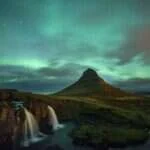
According to Visit Norway, the official travel guide to Norway, you can see the northern lights in Northern Norway from as early as late August until late March. Its winter tips page puts the usual window at late September to late March. Statistically, autumn (September and October) and spring (March and April) have the highest level of aurora activity, but the lights also appear through November to February.
Two conditions have to come together: the sky must be dark, and it must be clear. Visit Norway is honest that there is no guarantee the northern lights will appear, and notes that you can increase your chances on a guided tour.
The polar night: dark days, blue light
In the far north the sun does not rise at all for part of the winter. Visit Norway gives these approximate periods for the polar night:
- Tromsø: from the end of November to the middle of January
- Alta: from the end of November to the middle of January
- Kirkenes and the North Cape: from the end of November to the end of January
- Lofoten and Vesterålen: from the start of December to the start of January
- Svalbard: from the end of October to the beginning of February
Polar night does not mean pitch black all day. On clear days there may be some daylight around midday, and in the afternoon the light reflecting off sea and snow turns everything a deep cobalt blue, often called “the blue hour”. For children this can be a surprisingly magical part of the trip in itself.
How cold and how wet is it?
Coastal Northern Norway is milder than many people expect, but it is also wet. Five-year averages (ERA5 reanalysis via Open-Meteo) for Tromsø look like this:
- November: around 0°C by day, -4°C at night, with roughly 17 days of at least 1 mm of precipitation
- December: around -3°C by day, -8°C at night, roughly 13 such days
- January: around -3°C by day, -8°C at night, roughly 16 such days
- February: around -2°C by day, -6°C at night, roughly 15 such days
- March: around 0°C by day, -5°C at night, roughly 19 such days
Precipitation days are not the same as cloudy nights, but they are a fair reminder that you should plan several nights in the north rather than pinning everything on one evening.
Where to base yourselves
Visit Norway names Tromsø, Alta, Lofoten and Bodø as Arctic destinations for the aurora, and describes Tromsø as the main hub for northern lights trips. Nearby alternatives include Lyngen and Senja, along with Vesterålen, Narvik and Kirkenes.
Tromsø
For families, Tromsø has real practical advantages. Tromsø Airport lies only 5 kilometres from the city centre, which means short transfers with tired children. Visit Norway calls winter peak season in Tromsø thanks to the northern lights, plenty of snow and the Arctic atmosphere, and the polar night here starts at the end of November.
Lofoten and the rest of the north
Visit Norway notes that the Lofoten Islands have become a popular spot for aurora visitors, with a shorter polar night than Tromsø. Bodø, Narvik, Vesterålen, Alta and Kirkenes are other options if you want a quieter base.
Planning a wider Norway trip? Our Norway with kids page collects the family attractions we cover across the country.
Staying up late with children
Visit Norway says Northern Norway is dark from the afternoon until late morning, and that peak time for the aurora is often between 11 PM and 2 AM. That is long after most children’s bedtimes, so it pays to plan for it:
- Make the afternoon quiet. A rest or nap after an early dinner makes a late evening much easier.
- Agree on a plan before you go out. Decide in advance whether you will wake the children if the sky lights up, or take them out for an hour and head back.
- Keep the outdoor clothes ready by the door. Aurora displays can come and go quickly, and dressing a sleepy child takes time.
- Check the forecast. Yr, the weather service run by NRK and the Norwegian Meteorological Institute, shows an aurora activity level together with cloud cover for many places in Norway. Visit Norway also recommends checking the forecast for your route at yr.no.
- Consider a guided tour. Visit Norway says a guided tour can increase your chances.
Dressing children for an Arctic night
Aurora watching means a lot of standing still outside at night, so dress children more warmly than for a day of sledding. Visit Norway’s advice for Northern Norway in winter is to dress in layers:
- Start with a thin wool base layer.
- Add a mid-layer like a fleece or a woolly jumper.
- Finish with an outer layer to lock in the heat.
- Wear a hat and mittens. Mittens retain heat better than gloves.
- Choose waterproof shoes with good soles for snow and ice, with room for woollen socks or wool insoles.
- For icy days, add shoe spikes or grips.
With children, check hands and feet regularly and bring a thermos and snacks. If one child is cold and miserable, the aurora can wait while you warm up indoors.
Daytime activities for kids
The days are short, so plan one main activity in the light hours and keep the evenings free for the sky.
- Polaria, Tromsø. Visit Norway describes Polaria as an Arctic experience centre and the world’s northernmost aquarium, in the heart of Tromsø. Polaria’s own website lists exhibitions, a cinema, aquariums and a seal pool, with seal feeding and training at 10:30 and 12:30 every day.
- The Fjellheisen cable car. The cable car runs 421 metres up to Storsteinen for views over Tromsø, and you can book a guided snowshoeing tour at the top.
- Dog sledding and reindeer. Visit Norway lists husky sledding and reindeer sledding, often combined with a traditional meal, among Tromsø’s winter experiences. Sámi culture plays a key role in this part of Norway.
- Whale watching. From November to January, whales swim into the fjords around Tromsø in search of herring.
- Kicksledding and tobogganing. Visit Norway describes kicksledding as suited for both children and adults, and mentions family-friendly toboggan slopes.
Always check age limits and clothing requirements with the operator before booking a sled or boat trip.
Winter driving: be honest about your experience
Many aurora tours include transport, and for families that is often the safest choice. If you are thinking of renting a car, Visit Norway is very direct: do not drive in winter if you don’t have experience driving on cold, snowy and icy roads. Its advice includes:
- Icy, slippery roads, snow, darkness and poor visibility can make winter driving challenging.
- You’ll need winter or studded tyres during the winter months.
- Weather can close mountain passes, bridges and road sections for hours at short notice, and convoy driving is sometimes required. If there is a risk of convoy driving, keep a full tank or a fully charged battery.
- Check the Vegvesen app or vegvesen.no for the latest weather and driving updates.
If you are not used to these conditions, Visit Norway suggests hiring a car with a driver or travelling by public transport instead.
Final thoughts
A northern lights trip with children works best when the aurora is the bonus, not the only goal. Pick a base with short transfers, plan several evenings, keep the days full of snow, seals and sleds, and dress everyone for standing still in the cold. If the sky opens up, you will have a memory for life. If it doesn't, the children will still have had an Arctic adventure.
Frequently asked questions
When is the best time to see the northern lights in Norway?
Visit Norway says the lights can be seen from late August until late March, with the highest activity statistically in autumn (September and October) and spring (March and April). You need a dark, clear sky.
Are the northern lights guaranteed?
No. Visit Norway states there is no guarantee that the northern lights will appear. A guided tour can increase your chances, and planning several nights helps.
What time of night should we go out with the kids?
Visit Norway says peak time is often between 11 PM and 2 AM. A rest in the afternoon and clothes ready by the door make a late evening much easier for children.
Where is the best place in Norway for a family aurora trip?
Visit Norway describes Tromsø as the main hub for northern lights trips, and its airport is only 5 kilometres from the city centre. Alta, Lofoten, Bodø, Narvik, Vesterålen and Kirkenes are other options.
Is it completely dark all day in winter?
Not quite. During the polar night the sun stays below the horizon, but on clear days there may be some daylight around midday and a blue light in the afternoon. In Tromsø the polar night runs from the end of November to the middle of January.
Should we rent a car?
Only if you are experienced in winter driving. Visit Norway advises against driving in winter without that experience and suggests a car with a driver or public transport instead.
Weather data: Open-Meteo.com (CC BY 4.0), based on ERA5 from the Copernicus Climate Change Service. Five-year averages, not a forecast.