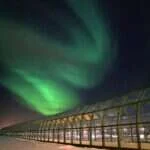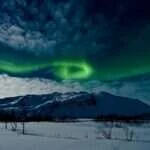
Iceland is a natural fit for a family northern lights trip. The aurora season is long, Reykjavík works well as a base, and the days in between can be filled with warm geothermal pools and dramatic landscapes. The aurora itself depends on darkness, clear skies and patience, and the weather decides a lot. This guide brings together what Iceland’s official tourism and weather sources say, with practical tips for planning late nights, warm clothes and safe winter driving with children.
When is northern lights season in Iceland?
Visit Iceland, the official tourism site, describes September to April as the main viewing window, when dark and long nights have replaced the bright summer nights. In North Iceland, the regional tourist board says the lights can be seen from the end of August to mid-April.
What you need, according to Visit Iceland, is darkness and clear skies, or at least openings in the cloud cover. It is also honest about the odds: there are no guarantees that you will see the northern lights during your stay. North Iceland’s tourist board gives a figure for its region: the chances of seeing the northern lights are 66% during a three-night stay in North Iceland.
What time of night?
Visit Iceland says that, on average, the aurora is most frequent in the Icelandic sky around 11 pm, and advises being outside from roughly 10 pm to 1 am at least. Another Visit Iceland article adds that there is no exact best time, and recommends following the forecast and the cloud cover through the evening.
Weather and temperatures
Temperatures in Iceland’s main towns hover around freezing in winter, but there are many days with rain or snow. Five-year averages (ERA5 reanalysis via Open-Meteo) give this picture:
- Reykjavík area: around -1°C by day and -7°C at night in January, with roughly 17 days of at least 1 mm of precipitation. November is around 2°C by day, with roughly 14 such days.
- Akureyri area (North Iceland): around -1°C by day and -8°C at night in January, with roughly 16 such days. February has roughly 14.
Precipitation days are not the same as cloudy nights, but they underline why it makes sense to plan several evenings rather than one.
Checking the aurora forecast
The Icelandic Meteorological Office publishes an aurora forecast at en.vedur.is. Its map of Iceland shows forecast cloud cover, with green areas cloudy and white areas clear, and a box shows the forecast auroral activity at midnight on a scale from 0 to 9. The page also gives the times of sunset, darkness, sunrise and moonrise for Reykjavík.
For families, the cloud map is the most useful part. On a night with high activity but thick cloud, an early night may be the better choice; on a clear night, even moderate activity is worth a try.
Where to base yourselves
Reykjavík
Reykjavík is the easiest base with children, and our city page lists the family attractions we cover there. Visit Iceland notes that the northern lights can be seen from Reykjavík, but that heading away from city lights can improve visibility, especially away from the light pollution of the capital.
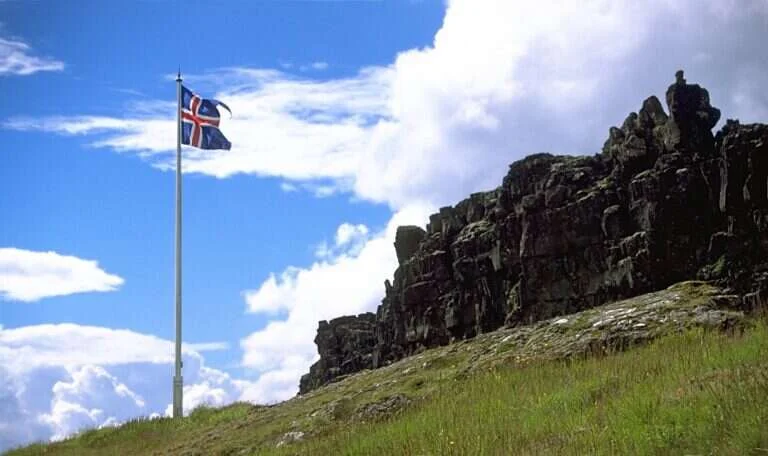
A day trip to Þingvellir National Park is a classic from Reykjavík. The park’s official site describes it as part of the Atlantic Ocean ridge that runs through Iceland, and as the place where the Alþing general assembly was established around 930. The visitor centre has an interactive exhibition about Þingvellir’s history and nature.
North Iceland
North Iceland’s tourist board highlights clear skies, wide-open landscapes and minimal light pollution, and names Dimmuborgir in the Mývatn region as an ideal photography spot. Tour operators listed by the board describe Akureyri as the capital of the north, and it is a natural base for the region.
For an overview of the country, see our Iceland with kids page.
Staying up late with children
With the most frequent aurora time around 11 pm, late nights are part of the deal. Some ways to make them easier:
- Rest in the afternoon. A quiet afternoon and an early dinner leave energy for the evening.
- Look at the cloud map together. Children enjoy being part of the “hunt”, and it helps them accept a no-go night.
- Take turns. One adult can watch the sky while the other stays in with younger children, and wake everyone if the lights appear.
- Bring the patience. Visit Iceland points out that sometimes you have to wait for the northern lights to appear.
- Consider a tour. Visit Iceland says you don’t necessarily need a tour, but excursion leaders are skilled at “hunting” the lights, and it saves you driving in the dark.
Dressing children for aurora nights
Visit Iceland’s advice is short and to the point: dress for standing still. Autumn, winter and spring nights can get cold, and Safetravel advises dressing warmly in layers. North Iceland’s tourist board suggests:
- thermals as a base layer
- a windproof outer layer
- gloves
- warm boots
Add hats, a thermos and snacks, and check children’s hands and feet regularly.
Daytime activities for kids
- Geothermal swimming pools. Visit Iceland says the whole family will find water slides, cosy hot tubs, cold pots and saunas at Iceland’s pools, and that nothing beats a warm pool or hot tub on a frosty winter afternoon. Note the house rule: everyone is required to wash without a bathing suit before entering the pool.
- Þingvellir National Park. History, geology and a visitor centre exhibition in one outing from Reykjavík.
- Exploring Reykjavík. See our Reykjavík with kids page for ideas in and around the city.
Safety: driving and stopping in the dark
Safetravel.is, Iceland’s travel safety website, has a specific warning for aurora watchers: under no circumstances is it allowed to stop your car in the middle of the road. In the dark it is nearly impossible for other drivers to see you. Its advice:
- Park your car at a designated parking area before you get out to watch the sky.
- Monitor the weather forecast and road conditions frequently, at road.is and en.vedur.is.
- Dress warmly in layers.
With children in the car, this matters even more. If you are not used to winter roads, a guided tour is the simpler option.
Tickets & tours for these places
Bookable tours via GetYourGuide. Affiliate links: we may earn a small commission at no extra cost to you.
Final thoughts
Iceland gives families a long aurora season, a compact capital to base yourselves in, and warm pools to come back to after a cold night. Watch the cloud map, plan several evenings, dress for standing still and never stop on the road. If the sky clears and the lights appear, it will be the highlight of the trip. If not, a hot tub under the winter sky is a very good consolation prize.
Frequently asked questions
When can you see the northern lights in Iceland?
Visit Iceland gives September to April as the main viewing window. In North Iceland the season runs from the end of August to mid-April. Summer nights are too bright.
Are the northern lights guaranteed in Iceland?
No. Visit Iceland says there are no guarantees that you will see them during your stay. North Iceland's tourist board puts the chance at 66% during a three-night stay in its region.
What time do the northern lights appear?
According to Visit Iceland, the aurora is most frequent around 11 pm on average, and you should be outside from roughly 10 pm to 1 am.
Can you see the northern lights from Reykjavík?
Yes, they can be seen from Reykjavík, but Visit Iceland says heading away from city lights can improve visibility.
How do we check the forecast?
The Icelandic Meteorological Office's aurora forecast at en.vedur.is shows a cloud cover map and the expected auroral activity on a scale from 0 to 9.
Can we stop the car when we see the lights?
Only at a designated parking area. Safetravel states that under no circumstances is it allowed to stop your car in the middle of the road.
Weather data: Open-Meteo.com (CC BY 4.0), based on ERA5 from the Copernicus Climate Change Service. Five-year averages, not a forecast.