Inflatable cubes, bed-box suitcases, leg hammocks and inflatable toddler beds all promise a flat bed for a toddler on a long flight, but airlines treat them very differently. Here is what each type does and what five airlines allow, as of October 2026.
Last reviewed: October 2026. Airline rules on these devices change often, and cabin crew have the final say on board. We haven’t tested any of these products; this guide is based on airline policies and product categories.
A flat surface for a toddler to sleep on during a long flight sounds like the answer to every parent’s prayers. A whole market has grown up to provide it: inflatable cubes that fill the footwell, ride-on suitcases that open into a bed, hammocks that hang from the tray table, and inflatable mattresses that turn a seat into a small bed. The catch is that airlines treat these devices very differently. One may welcome a product that the next airline bans outright. This guide explains the main types, what each airline we checked allows, and what to think about before you buy.
Quick answer
- Check your airline first, then buy. Some airlines allow inflatable cubes but not bed boxes, some allow bed boxes but not hammocks, and some don’t allow any of them.
- Your child needs their own seat. All these devices extend a seat; none of them work for a lap infant. The American Academy of Pediatrics (AAP) says sleeper seats are an option only after a child’s first birthday.
- Window seats only, at most airlines that allow them, so the device never blocks anyone’s way out.
- The seatbelt rule doesn’t change. Children must be buckled in when the seatbelt sign is on, and most airlines ask you to pack devices away for taxi, take-off and landing.
- If in doubt, a car seat your child already sleeps in is accepted by most airlines and is what the FAA calls the safest option for under-2s.
The main types
Inflatable footrest cubes
An air-filled cube or cushion that sits on the floor in front of the child’s seat, raising a flat surface to the height of the seat cushion. With the child’s legs on the cube, the seat becomes something closer to a small bed. They pack small when deflated, and most are inflated by mouth or with a small hand pump. Qantas, which allows them, requires that they inflate manually (no battery pumps) and have a quick-release valve facing the aisle.
Ride-on suitcases that become a bed
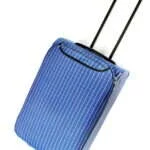
A hard-shell child’s suitcase that a child can sit on and be pulled along in the airport, and that opens on board to form a platform in front of the seat. The best known is the JetKids BedBox, which several airlines name in their rules. The advantage is that it does two jobs. The disadvantage is that it counts as cabin baggage and is heavy compared with an inflatable cube.
Leg hammocks
A fabric sling that hangs from the tray table or the seat in front, so the child’s legs rest in it. They are light and small, but because they attach to the seat in front, many airlines don’t allow them. Fly LegsUp and the Flyebaby hammock are examples named by airlines.
Inflatable toddler beds and seat extensions
Larger inflatable products that fill the footwell and the seat together, or extend the seat cushion forwards. Examples named by airlines include the Fly Tot and Flyaway Kids Bed. They give the flattest surface, but are banned by several airlines.
Decision table: what five airlines allow
This is what each airline says on its own website, as of October 2026. Policies change, so check again before you fly, and remember that the crew can refuse a device on the day.
| Airline | Inflatable cubes | Bed-box suitcases | Leg hammocks | Key conditions |
|---|---|---|---|---|
| Qantas | Allowed (the only comfort device currently approved) | Not allowed (hard-shell bed boxes stay at home) | Not allowed | Economy and Premium Economy only; not in exit or bulkhead rows; manual inflation, quick-release valve facing the aisle; must not stop the seatbelt being fastened; pack away when the seatbelt sign is on; counts as carry-on |
| Cathay Pacific | Subject to acceptance | Accepted (JetKids BedBox given as an example) | Not accepted (Fly LegsUp and Flyebaby hammock given as examples) | Devices must not affect the seat or other passengers, and only in seats where they don’t block the way or create a tripping hazard, such as a window seat |
| Virgin Australia | Allowed (Plane Pal and Fly Tot named) | Allowed (JetKids BedBox named) | Not stated | Set up only once the seatbelt sign is off; stow for taxi, take-off and landing; inflatable valve facing the aisle; counts towards carry-on allowance |
| Emirates | Not allowed for use (Plane Pal and Sky Rest named) | Not allowed for use (BedBox named); ride-on suitcases only in the overhead locker | Not allowed (Fly Legs-up named) | Items may be carried as cabin baggage if kept in the overhead locker and not used during the flight |
| Delta | Not allowed if they block the footwell | Not stated by name | Not allowed (items attached to seats or tray tables) | Inflatable toddler beds such as Fly Tot and Flyaway Kids Bed not permitted; nothing that blocks aisles or footwells or creates a tripping hazard |
Sources: Qantas “Flying with infants and children”; Cathay Pacific “Children’s sleeping devices”; Virgin Australia “Flying with kids”; Emirates “Special assistance and requests” help page; Delta “Children & Infant Baggage Items”. All checked 24 October 2026.
Other airlines have their own rules. If your airline isn’t listed, search its website for “comfort devices”, “sleeping devices” or “travelling with children”, or contact it before you buy. If you have a connecting flight on a different airline, check both.
Recommended approach and what to avoid
Before you buy
- List every airline on your trip, including the return and any codeshare flights operated by another airline.
- Check each airline’s current policy on its own website. Take a screenshot with the date in case of questions on board.
- Check that your child will have their own seat, and ideally a window seat.
- Choose the type that is allowed on all your flights. If one airline bans it, you will be carrying it for nothing on that leg.
What to look for in a device
- Fits the seat pitch: economy seat pitch differs between aircraft. A device that fits on one airline may not fit on another.
- Doesn’t attach to the seat in front or the tray table: many airlines ban anything that does.
- Doesn’t stop the seatbelt being used: your child must be able to stay buckled while lying on it.
- Quick to put away: for turbulence and landing. Inflatables need a quick-release valve.
- Manual inflation: Qantas, for example, doesn’t allow battery-powered pumps.
- Weight and size against your cabin baggage allowance, as most airlines count the device as carry-on.
What to avoid
- Buying a device because a friend used it on another airline.
- Using any device in an exit row or bulkhead row, or in an aisle seat where it could trip someone.
- Letting a child sleep unbuckled because they’re lying down. The AAP says children must be buckled in during take-off, turbulence and landing.
- Using sleep devices for babies under one. The AAP says sleeper seats are an option only after the first birthday, and babies should sleep on a firm, flat surface with no pillows or loose blankets.
Alternatives that are almost always allowed
A car seat
The FAA says the safest place for a child under two on a US airplane is an approved child restraint system, not a lap. A car seat certified for aircraft use, in a seat you’ve paid for, is accepted by most airlines. Many children who sleep well in the car also sleep well in their car seat on a plane. See our guide to flying long-haul with a one-year-old for the rules.
The bassinet
For babies, the airline bassinet is the original airplane bed. Limits are usually around 11 to 14 kg, and some airlines require that the baby can lie flat or can’t yet sit up. Our one-year-old guide compares five airlines’ limits.
A good pillow and the right flight time
For older toddlers and preschoolers, a small travel pillow, a blanket, their usual comfort toy and a flight that leaves near bedtime often work as well as a device. Many children will curl up across a seat and a parent’s lap once the seatbelt sign is off.
Shopping by category
If your airline allows them, these Amazon searches show the categories: inflatable airplane footrests for kids, ride-on suitcases with a bed function and kids’ travel pillows. We haven’t tested these products and don’t rank them. Check your airline’s rules before you buy.
As an Amazon Associate we earn from qualifying purchases. Read our affiliate disclosure.
Next steps
For the rest of the flight, see our under-seat bag packing list, quiet airplane toys for two-year-olds and flying long-haul with kids.
Final thoughts
Check every airline on your trip before you buy, make sure your child has their own seat (ideally a window), keep them buckled whenever the seatbelt sign is on, and remember that a car seat is accepted almost everywhere.
Frequently asked questions
Are inflatable footrests allowed on planes?
On some airlines. Qantas and Virgin Australia allow them with conditions; Emirates and Delta don't allow devices like this to be used. Check each airline on your trip.
Is the JetKids BedBox allowed on all airlines?
No. Cathay Pacific and Virgin Australia name it as accepted. Qantas doesn't allow hard-shell bed boxes, and Emirates doesn't allow BedBox to be used on board, although it can be carried in the overhead locker as cabin baggage.
Can I use an airplane bed with a lap infant?
No. These devices extend a seat, so your child needs their own seat. For babies, ask about a bassinet instead.
From what age can a child use a sleeper device on a plane?
The AAP says sleeper seats are an option only after a child's first birthday. Products have their own age and weight limits too.
Do these devices count as cabin baggage?
At most airlines we checked, yes. Qantas and Virgin Australia say they count towards your carry-on allowance.
Can the crew stop me using a device even if the airline allows it?
Yes. Qantas says the crew will check the device on board, and you won't be able to use it if it doesn't meet the guidelines.
Can my child use the device during take-off and landing?
No. Airlines that allow them ask you to stow them for taxi, take-off and landing, and children must be buckled in whenever the seatbelt sign is on.