Giving children their own luggage makes them part of the trip, but the right bag depends on age. Here is how backpacks, small wheeled cases and ride-on suitcases compare, what each age group can manage, and how they fit airline cabin limits.
Last reviewed: October 2026. We haven’t tested individual products. This guide compares luggage types and explains how to choose.
Giving children their own luggage is one of the easiest ways to make them part of the trip. A child who packs and carries their own bag has something to look after, and the adults have a little less to carry. But the right bag depends a lot on age. A toddler can’t pull a case through an airport, a five-year-old may love a ride-on case for a year or two, and a ten-year-old usually prefers a backpack. This guide compares the three main options and how each works with airline cabin limits.
Quick answer
- Toddlers (1 to 3): a very small backpack with a comfort toy and a snack, carried mostly by you. The real luggage goes in the family’s bags.
- Pre-school (3 to 6): a small backpack, or a ride-on case if they tire on long walks and you’re not bringing a stroller.
- School age (6 to 12): a backpack that fits under the seat, plus a small wheeled case they pull themselves if needed.
- Check the cabin limits: a child with their own seat usually has the same allowance as an adult, but sizes vary by airline.
- Light empty weight matters more than looks. Every kilo of luggage is a kilo less for clothes.
Decision table: three types compared
| Backpack | Small wheeled case | Ride-on case | |
|---|---|---|---|
| Best ages (approx.) | All ages; essential from about 4 | About 5 and up, when they can pull it | About 3 to 6 |
| Who carries it | Child, on their back | Child pulls it | Adult pulls it, child rides |
| Fits under the seat | Usually, if small | Sometimes; often goes in the overhead locker | Usually overhead locker |
| Empty weight | Lightest | Light to medium | Heaviest |
| Stairs, cobbles, public transport | Easiest | Manageable | Hardest |
| Main drawback | Heavy if overpacked | Abandoned when the child is tired | Heavy on non-ride days |
Cabin size limits for children
On most airlines, a child with their own seat has the same cabin allowance as an adult. easyJet, for example, gives children over two and infants with their own seat the same allowance as adults: a small under-seat bag up to 45 x 36 x 20 cm, plus a large cabin bag up to 56 x 45 x 25 cm if booked (as of October 2026). Virgin Australia’s Economy allowance is a standard bag up to 8 kg and 56 x 36 x 23 cm plus a personal item of 45 x 33 x 20 cm. A lap infant usually doesn’t get a cabin bag of their own, although some airlines allow an extra changing bag.
So a family of four may be able to bring four under-seat bags and four cabin cases. Whether you want to carry that many is another question.
By age: what works
Toddlers (about 1 to 3)
Toddlers love having “their” bag but rarely carry it for long. A tiny backpack with a comfort toy, a snack and a board book is plenty. Choose one with a chest strap so it stays on, and accept that you’ll end up holding it. Anything important (nappies, milk, a change of clothes) belongs in your bag. See our under-seat bag packing list.
Pre-school (about 3 to 6)
This is the age where a ride-on case makes most sense: children walk most of the time but tire on long airport corridors. If you’re also bringing a stroller, a ride-on case is often one thing too many. A small backpack is a good alternative. Our guide to ride-on suitcases for kids covers the types and airline rules, including whether a bed-box case can be used on board.
School age (about 6 to 12)
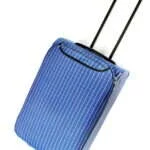
Most children of this age can carry a backpack all day and pull a small wheeled case through an airport. A backpack that fits under the seat holds their flight things: headphones, a tablet, a book, snacks and a jumper. A wheeled case or a share of the family suitcase holds clothes.
Choosing a backpack
- Size: small enough to fit under the seat in front (check your airline’s under-seat dimensions).
- Padded, adjustable straps and a chest strap.
- Light empty weight.
- A side pocket for a water bottle.
- Easy zips the child can open themselves.
- Don’t overload it. Pack it with your child and let them try it on before you leave.
We cover backpacks in more detail in kids’ travel backpacks by age.
Choosing a small wheeled case
- Measurements including wheels, against your airline’s limits.
- Two or four wheels: two wheels roll better over rough ground; four are easier on smooth floors.
- A handle at the right height for your child.
- Light empty weight, so it doesn’t eat into the allowance.
- A design your child can recognise on the luggage belt or in the overhead locker.
What to avoid
- Buying a case your child will outgrow in a year unless they’ll use it often.
- Too many bags per family: each one is something to carry, lose or forget.
- Putting essentials in the child’s bag only. If they leave it on the plane, you lose the medicine too.
- Power banks or spare batteries in a case that might be checked at the gate. The FAA says these must stay in the cabin.
- Name and address visible on the outside: use a tag with a cover.
Shopping by category
These Amazon searches cover the main categories: kids’ travel backpacks, kids’ carry-on suitcases, ride-on suitcases and luggage tags. We haven’t tested these products and don’t rank them.
As an Amazon Associate we earn from qualifying purchases. Read our affiliate disclosure.
Next steps
For how to fit a whole family’s things into fewer bags, see the family packing list that fits in one bag.
Final thoughts
Toddlers need a tiny backpack and little else, pre-schoolers may enjoy a ride-on case, and school-age children do best with an under-seat backpack and a small case they pull themselves. Keep essentials in an adult's bag.
Frequently asked questions
Do children get their own cabin bag allowance?
Usually, if they have their own seat. easyJet, for example, gives children over two the same cabin allowance as adults. Lap infants usually don't, although some airlines allow an extra changing bag.
What size suitcase does a child need?
For a week, many children's clothes fit in a small cabin-size case or a share of a family suitcase. Check your airline's cabin limits, including wheels.
At what age can a child carry their own luggage?
Most children can carry a small backpack from about four, and pull a small wheeled case from about five or six. Toddlers like having a bag but rarely carry it for long.
Is a ride-on suitcase better than a backpack?
For pre-schoolers on long airport walks, a ride-on case can help. A backpack is lighter, works better on stairs and public transport, and lasts more years.
Should my child's bag hold their medicine?
No. Keep medicine and documents in an adult's bag, so nothing important is lost if the child's bag is left behind.